

Orbix Technology Shares Insights on the Future of Thailand’s Cross-Border Remittance on the Global Stage at Money20/20 Summit Thailand
Amid the transformation of the global financial system, Stablecoins and Programmable Money are increasingly being recognized as new mechanisms for cross-border payments, particularly in Asia, where trade, investment, and tourism play a significant role in driving the region’s economic activity.
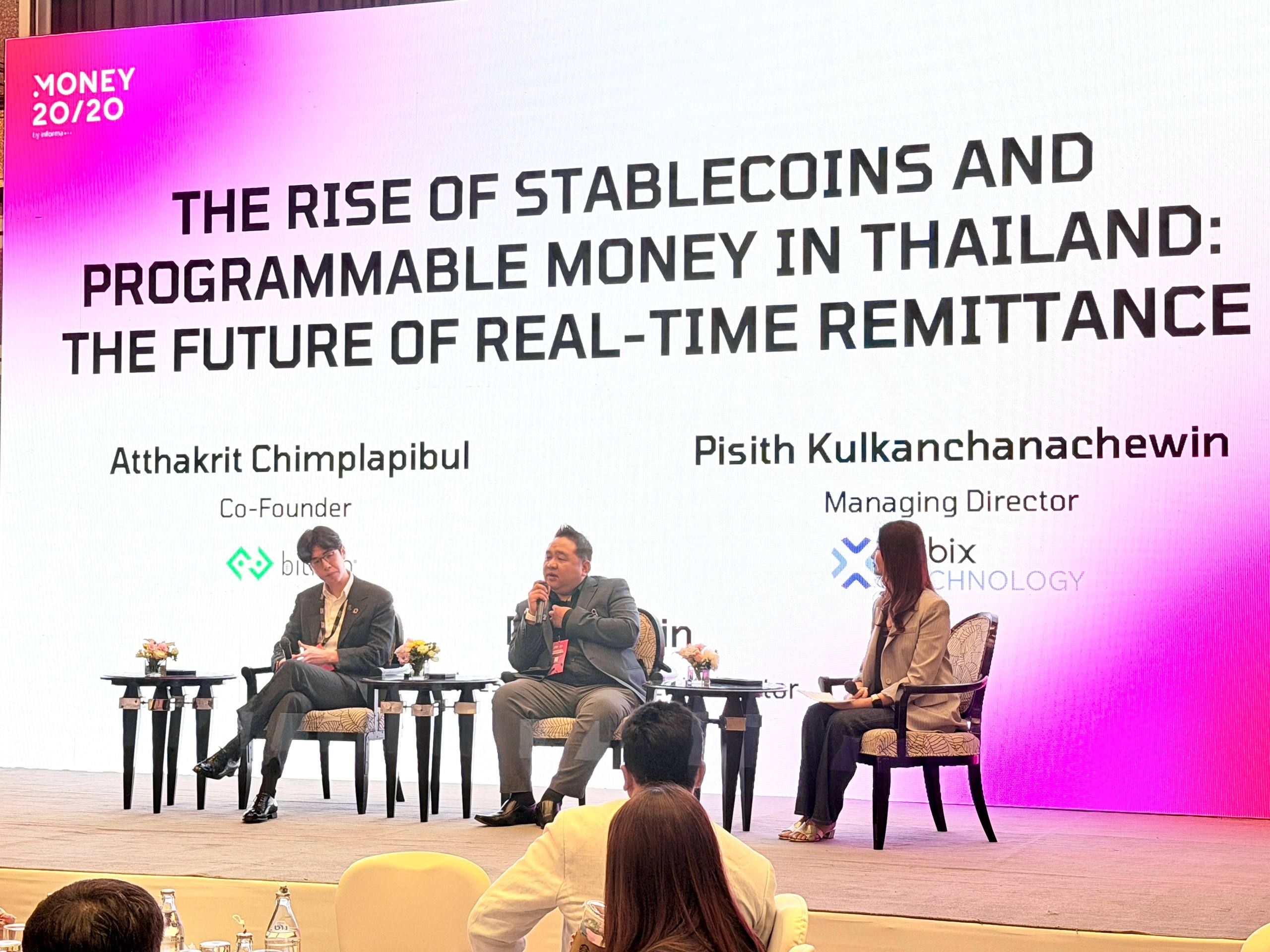
At Money20/20 Summit Thailand, an international fintech event that brings together leaders from banks, financial institutions, fintech companies, and leading organizations from around the world, a panel discussion was held under the topic “The Rise of Stablecoins and Programmable Money in Thailand: The Future of Real-Time Remittance.”
The panelists included Mr. Pisith Kulkanchanachewin, Managing Director of Orbix Technology & Innovation; Mr. Atthakrit Chimplapibul, Co-Founder of Bitkub Group; and Ms. Debbie Lin, Business Development Director of Money20/20 Asia.
From Orbix Technology’s perspective, the growth of Stablecoins is not merely a technological trend, but is increasingly becoming part of the design of regulated financial infrastructure.
Mr. Pisith views the growth of stablecoins as a global trend. The payments sector is beginning to consider stablecoins as an alternative for cross-border remittance and settlement. However, the key issue is not the issuance of more stablecoins, but the development of a regulated settlement corridor that can truly connect with banking systems, operate under regulatory oversight, and support enterprise-level use cases with stability and security.
In the context of Thailand, THBS (Thai Baht Programmable Payment) is an electronic data unit backed by Thai Baht deposits (1 THBS = 1 THB). It can be used as a medium of exchange for goods and services within Thailand in real time. The system is currently being tested under the Enhanced Regulatory Sandbox of the Bank of Thailand.
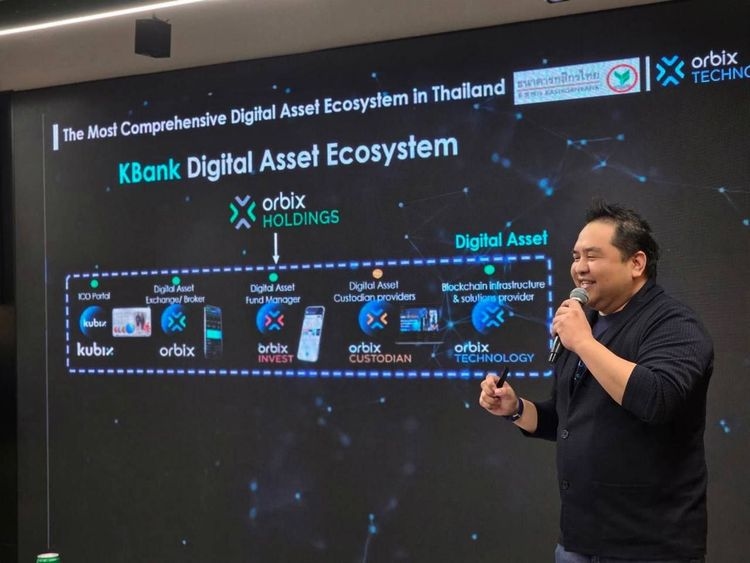
The collaboration between KASIKORNBANK and Orbix Technology clearly reflects this approach through the development of Q-money, an e-money issued on blockchain, alongside THBS as a Programmable Payment built on the Quarix blockchain infrastructure to support financial transactions via the Q Wallet by KBank application.
One of the key use cases is the Programmable Payment project, which allows foreign tourists from more than 20 countries to convert USDC into THBS within the Q Wallet application and conveniently scan and pay via QR codes at participating merchants.
A key feature is that e-KYC identity verification can be completed without visiting a bank branch, while merchants receive Thai Baht immediately. This project is currently being tested under the Enhanced Regulatory Sandbox of the Bank of Thailand and the Digital Asset Regulatory Sandbox of the Securities and Exchange Commission of Thailand.
In addition, cross-border remittance testing is being conducted in collaboration with Kinexys by J.P. Morgan, enabling corporate customers to transfer funds 24 hours a day, reducing transaction times from several days to only a few minutes. This service is being tested under the Regulatory Sandbox of the Bank of Thailand.
These developments reflect that stablecoins, THB Programmable Payment, or similar digital assets are not immediately replacing existing financial systems, but are gradually being integrated into financial infrastructure under clear regulatory frameworks to improve efficiency, transparency, and trust in the digital financial system.
Although blockchain technology enables cross-border transfers to operate 24 hours a day, the core significance lies not only in the speed of settlement, but also in the ability to define payment conditions through smart contracts under appropriate regulatory frameworks.
By defining the logic for releasing funds based on pre-verified conditions, operational risks can be reduced, transparency can be enhanced, and auditability can be strengthened.
This evolution moves financial transactions beyond simple Remittance toward the ability to design and program programmable cash flow.
At the same time, these developments must operate within strong risk management frameworks, internal controls, regulatory oversight, and system security standards, including business continuity measures, to ensure that they do not pose risks to users or to the overall stability of the financial system.
Advancing financial infrastructure through blockchain technology aims to create programmable cash flow that enhances systemic efficiency and reduces operational risk through transparent and verifiable smart contracts.
However, achieving widespread adoption requires secure integration with existing financial institution systems (Legacy Systems) under clear legal frameworks, accounting and tax standards, and defined service standards (SLA). These elements are essential to protect users and maintain financial stability.
Therefore, Orbix Technology and KASIKORNBANK remain committed to studying and developing use cases with partners across the financial sector, with strong emphasis on regulatory compliance and the establishment of reliable common standards.
These efforts aim to create a solid foundation for the country’s sustainable digital economy, while ensuring that use cases will be discussed with and approved by relevant regulatory authorities before any future commercial deployment.
Over the next 3–5 years, the direction of programmable money and stablecoins is not to replace systems such as SWIFT or existing financial infrastructure.
Instead, they will be integrated as new financial service channels capable of supporting both transaction data exchange and asset settlement under clear regulatory frameworks.
Financial institutions will continue to play a critical role as system orchestrators operating under trusted governance, while blockchain technology will serve as the core infrastructure layer connecting both public and private networks with security and stability.
This interoperability between networks will strengthen flexibility and resilience within the broader digital financial system.
At Money20/20 Summit Thailand, Orbix Technology’s perspective clearly highlights that the future of Thailand’s cross-border remittance system will not be driven by technology trends alone, but by the design of trusted, interoperable, and regulated infrastructure at the regional level.
When money becomes programmable, the key question is no longer simply “how fast” transactions can move, but “how resilient, trustworthy, and sustainably integrated the financial system can be.”
Latest Blogs